Launch offer — valid today only

📄 Digital book in PDF · read it on your phone or print it

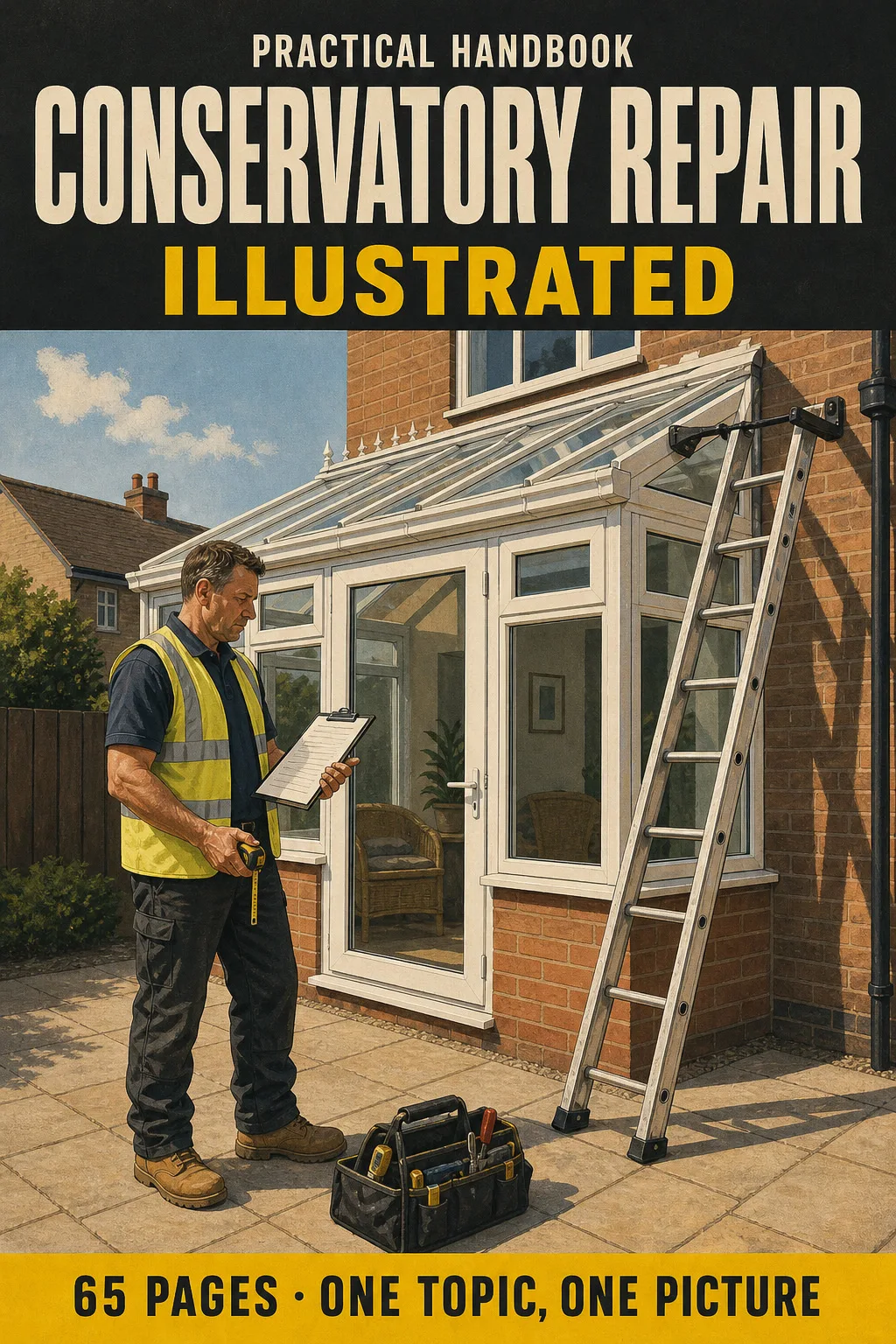
Conservatory Repairs in Drawings: Find Where the Water Gets In Before You Reseal Again One Job on Every Page

Tracing a leak from ridge to wall, slipped polycarbonate panels, top caps and gaskets, old silicone, gutter joints, lead flashing, misted sealed units and new roof options. Each topic has its page: first the drawing, then what you need to remember. 65 illustrated pages.

GET THE ILLUSTRATED REPAIR BOOK

🔒 Secure checkout · PDF by email · 30-day guarantee

Every topic, its own pageEach repair drawn as a labelled cutaway, with the explanation beside it
65 illustrated pages8 parts, from the roof named part by part to when to call in a professional
Up-to-date sourcesApproved Documents K and L, Planning Portal guidance and HSE work-at-height guidance
PDF by emailFormat

Look Inside the Book

Every page has one big drawing and a box with the measurements and steps you need to know:

Polycarbonate: hollow flutes, 16/25/35 mm. Glass: sealed units about 24–28 mm.
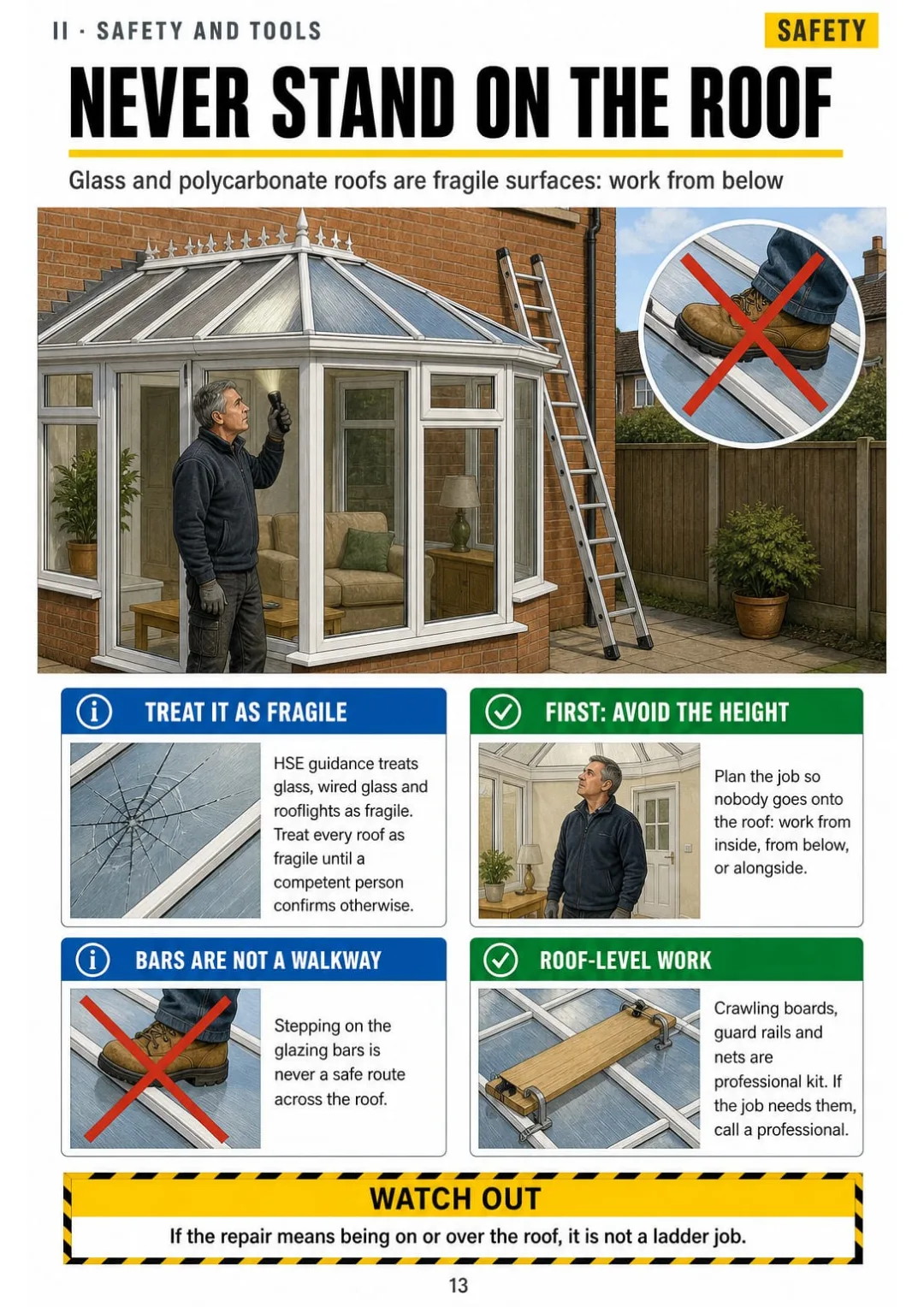
HSE guidance treats glass and rooflights as fragile: work from inside, below or alongside, never on the roof.
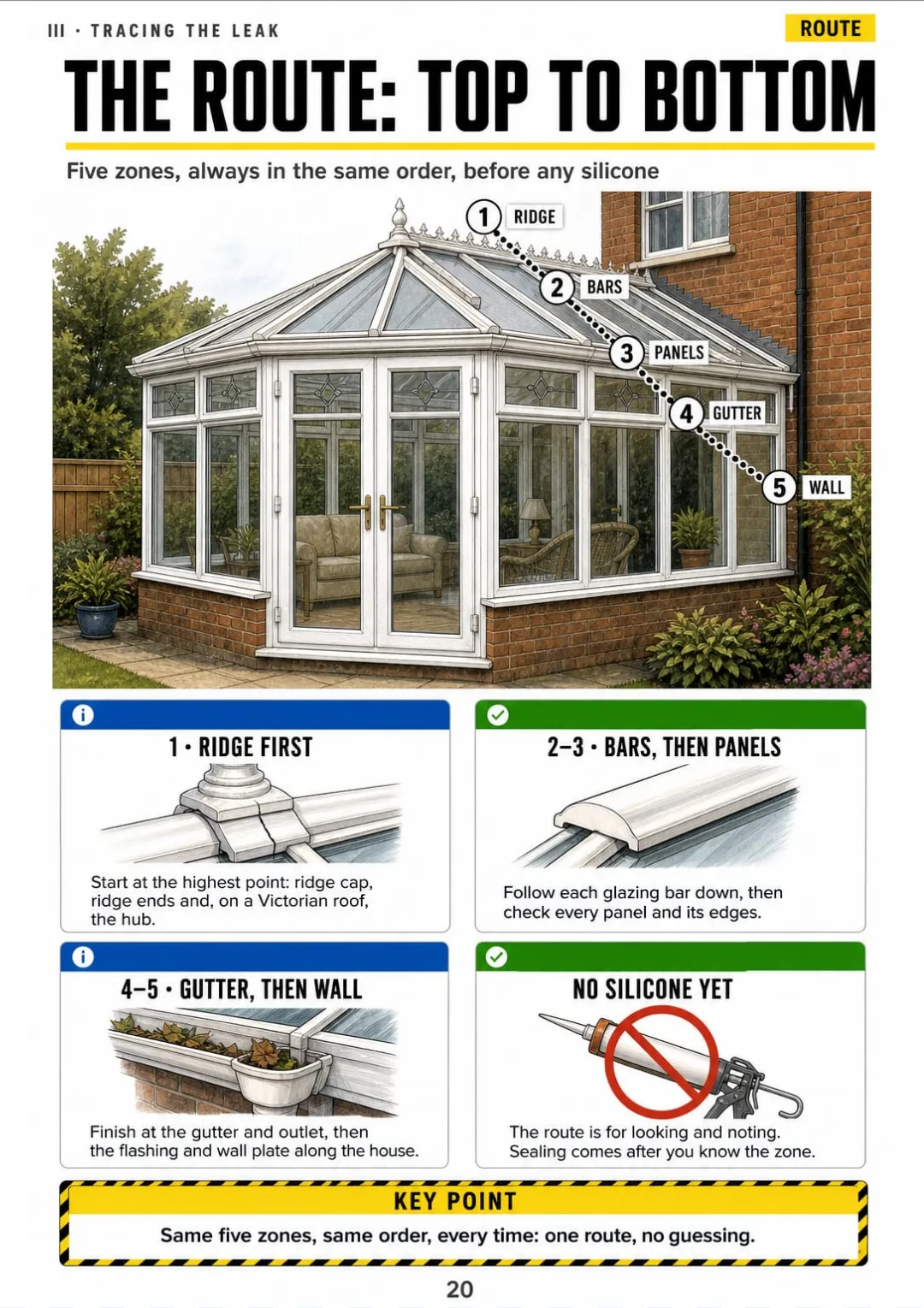
Ridge → bars → panels → gutter → wall: the same route on every roof
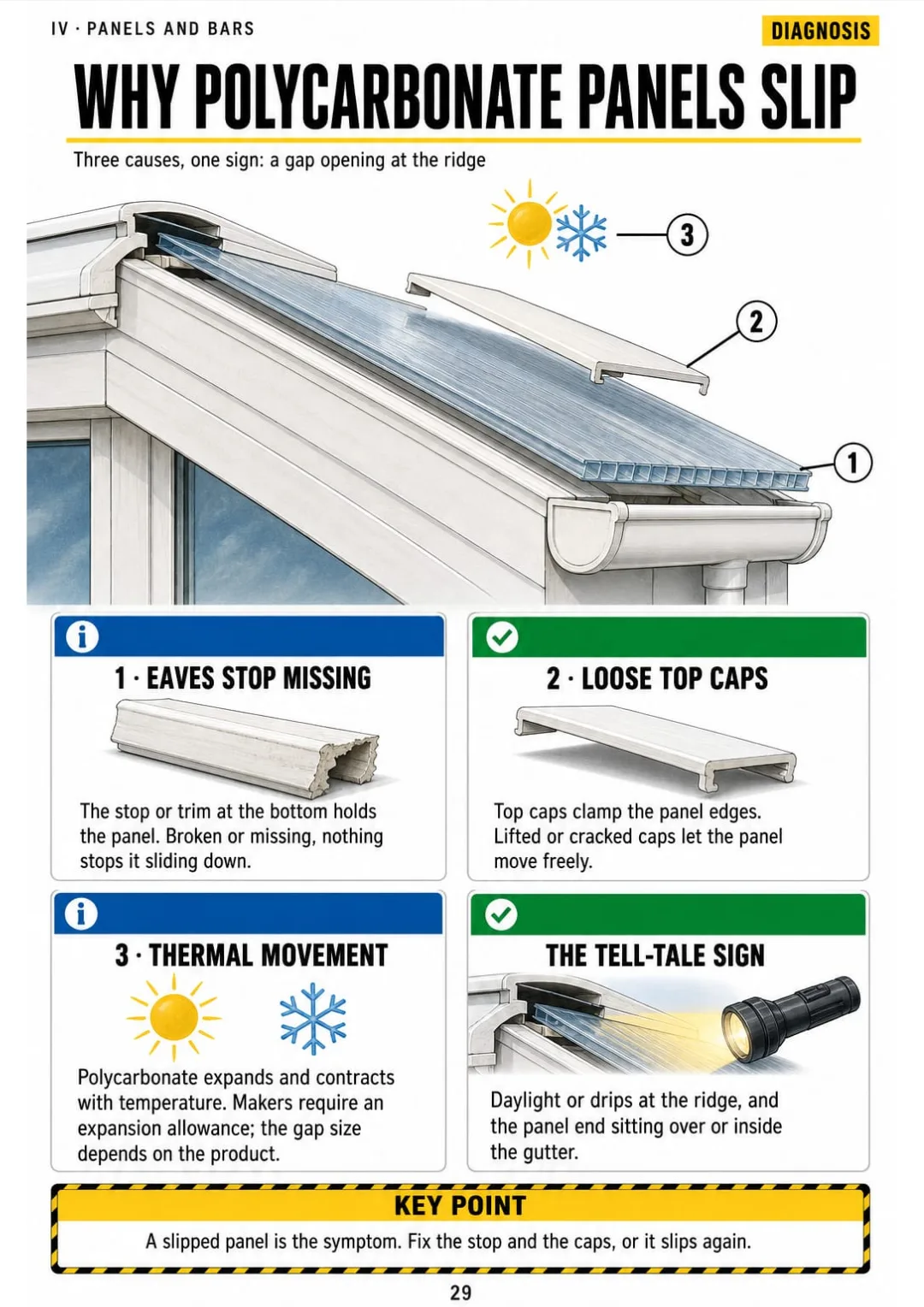
Missing eaves stop, loose top caps or thermal movement: why panels creep towards the gutter.
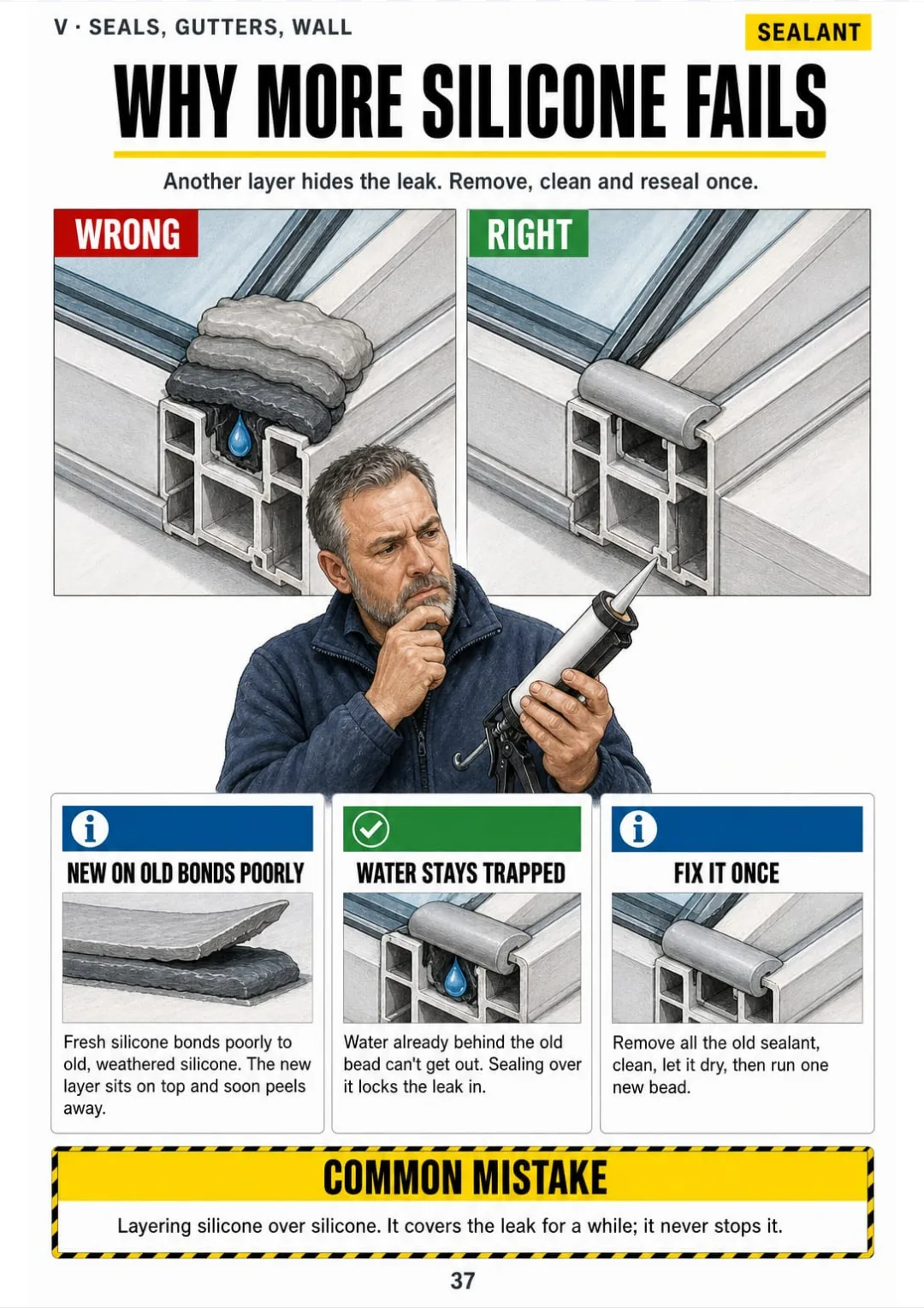
Fresh silicone bonds poorly to old silicone: strip it back and reseal once.
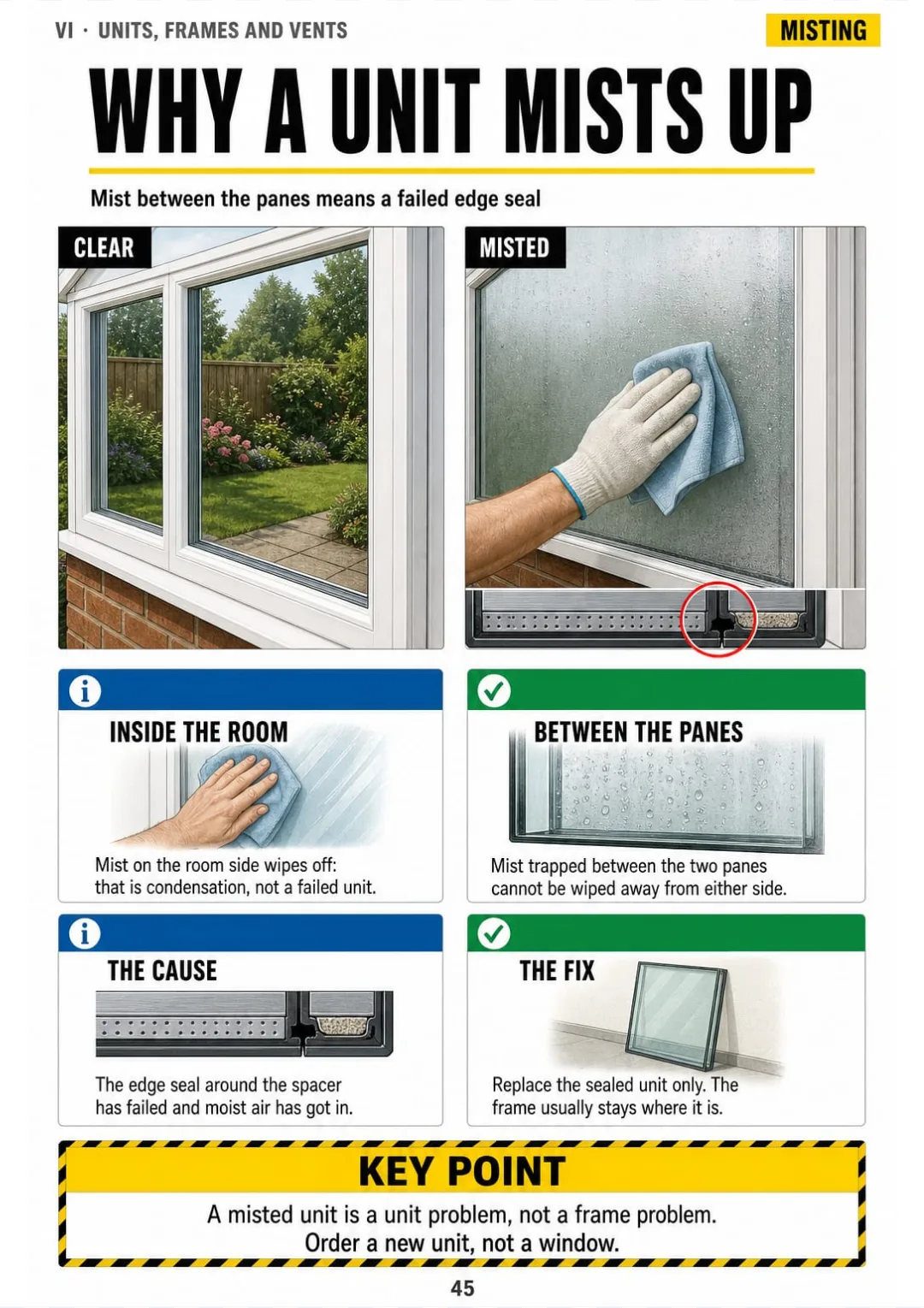
Misting between the panes = failed edge seal: replace the unit, keep the frame.
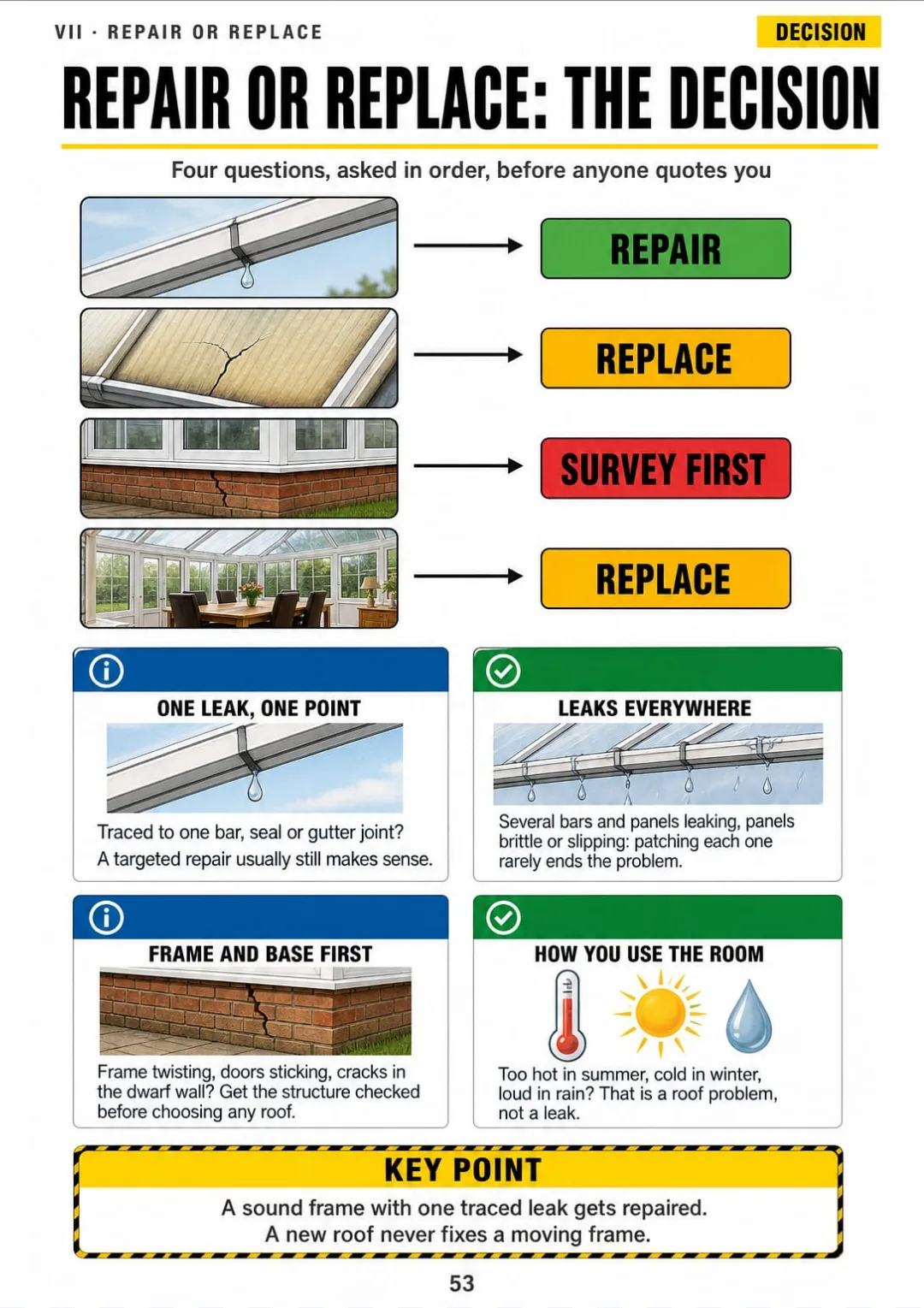
Decision chart: number of leaks, panel age, frame and base, how the room is used.
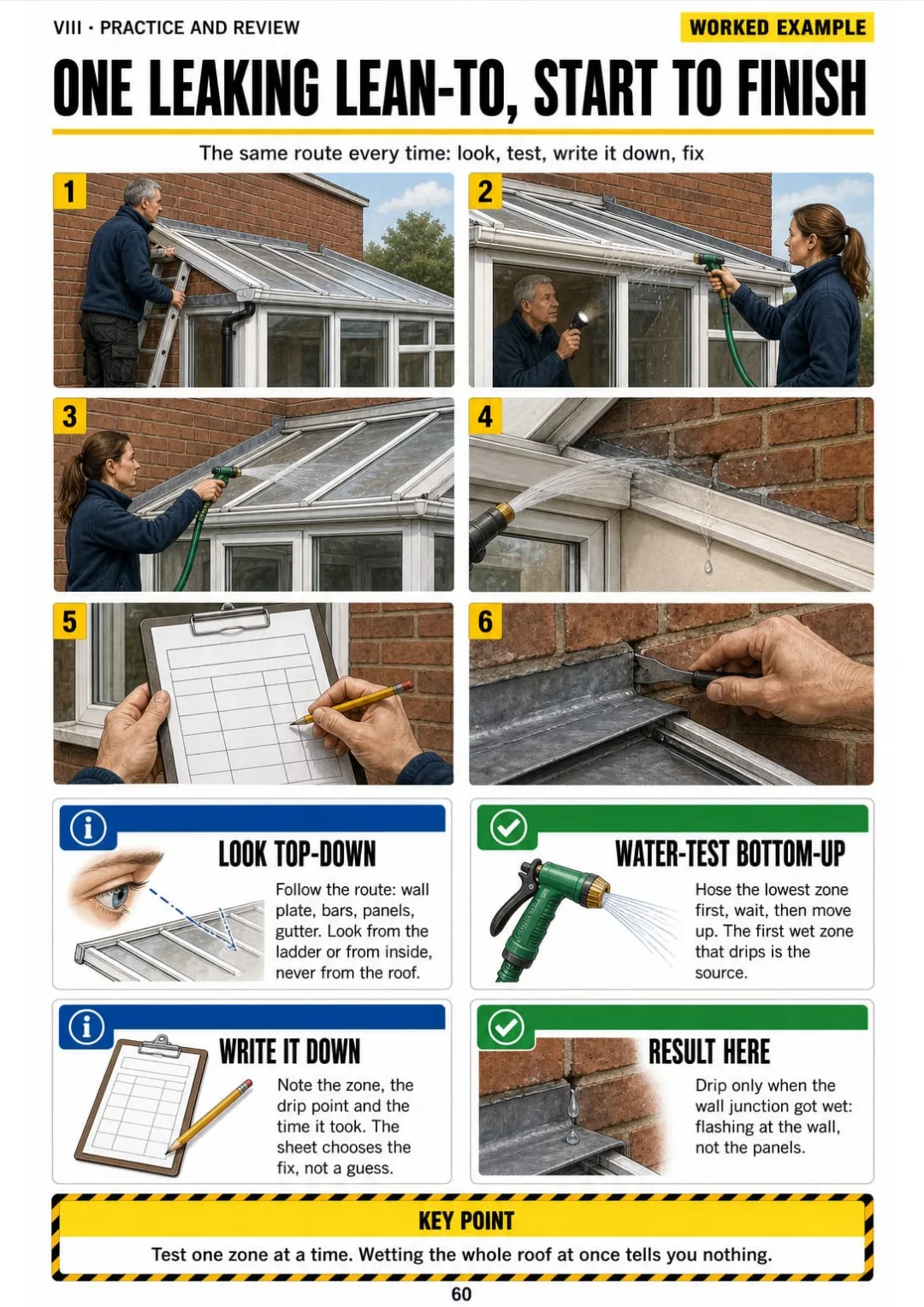
Look top-down, water-test bottom-up, write it down: the leak was at the wall, not the panels.

Swipe to see more →

These are real pages from the book. The table of contents is the full one: 8 parts and 61 topics.

The Problem Isn't You. It's How It Was Explained to You.

You're standing under the conservatory roof after a night of rain, looking at a drip on the floor and a damp line along a glazing bar. You've sealed that joint already, and the water is still getting in.

You look it up. One video blames the ridge, another the gutter, and a guide gives you three paragraphs on capillary action and wind-driven rain. Nobody tells you where to start looking, so you pick up the silicone gun again.

Ridge → bars → panels → gutter → wall: the same route on every roof

In the book, finding that leak takes one page: the roof drawn in section, with the route marked in order. Ridge, bars, panels, gutter, wall: the same route on every roof, with what to check at each stop.

The rest has its own page too: why polycarbonate panels slip, why fresh silicone won't bond to old, why a sealed unit mists up, lead flashing at the wall, and the repair-or-replace decision.

You go up the ladder knowing what to look at first, find where the water really gets in and fix it once, without going back to the screen.

COMPARE FOR YOURSELF

The Same Topic, Two Ways to Learn It

THIS
  • Ten videos, ten different answers
  • Working at height explained only in words
  • You go up the ladder still unsure
Conservatory roof coverings, whether glazed with sealed glass units or polycarbonate multiwall sheet, should be regarded as fragile surfaces for the purposes of work at height, as they may not be capable of supporting the weight of a person. Accordingly, access onto the roof covering should be avoided, and work should be planned so that it can be carried out from beneath, from within the structure, or from a suitable platform positioned alongside, with due consideration given to the stability of ladders and the provision of edge protection.
FOR THIS
  • Where to work from, in one drawing
  • The safety rules in one box
  • You see it and you get it
HSE guidance treats glass and rooflights as fragile: work from inside, below or alongside, never on the roof.
CONTENTS

Take a Look at the 8 Parts and 61 Topics

Know your conservatory, safety and tools, tracing the leak, panels and glazing bars, seals, gutters and the wall, sealed units and frames, repair or replace, and practice and review: 65 pages, all illustrated

IKnow Your Conservatory · pp. 5-12
  1. The roof, named part by part
  2. Lean-to, Victorian, Edwardian, P-shape, gable
  3. Polycarbonate or glass roof?
  4. The wall plate and the house junction
  5. Eaves beam and gutter
  6. Ridge, hips and the box gutter
  7. uPVC, aluminium and timber frames
  8. Signs of age at 15 to 25 years
IISafety and Tools First · pp. 13-19
  1. Never stand on the roof
  2. Setting a ladder safely
  3. Handling a glass unit
  4. The toolkit for conservatory repairs
  5. Choosing the right sealant
  6. Weather for sealing
  7. Safety glazing in critical locations
IIITracing the Leak · pp. 20-28
  1. The route: ridge, bars, panels, gutter, wall
  2. Look top-down, water-test bottom-up
  3. Reading the stain
  4. Ridge leaks
  5. Glazing bar leaks
  6. Gutter and outlet leaks
  7. Wall junction leaks
  8. Condensation or a real leak?
  9. The inspection sheet
IVPanels and Glazing Bars · pp. 29-36
  1. Why polycarbonate panels slip
  2. Refitting a slipped panel
  3. Panel end tapes: top and bottom
  4. Flutes run with the fall
  5. Measuring a replacement polycarbonate sheet
  6. Removing and refitting top caps
  7. Renewing glazing bar gaskets
  8. Bar end caps and ridge end caps
VSeals, Gutters and the Wall · pp. 37-44
  1. Why more silicone fails
  2. Removing old sealant completely
  3. Running a good bead
  4. Cleaning the gutter and outlet
  5. Fixing a leaking gutter joint
  6. Lead flashing at the wall
  7. Alternatives to lead
  8. Sealing the wall plate
VISealed Units, Frames and Vents · pp. 45-52
  1. Why a unit mists up
  2. Measuring a sealed unit
  3. Reading the unit spec
  4. Internal or external beads
  5. Packers: toe and heel
  6. Drainage slots and the cill
  7. Doors and windows that drop or stick
  8. Roof vents and openers
VIIRepair or Replace the Roof · pp. 53-59
  1. Repair or replace: the decision
  2. New roof options compared
  3. Weight and the existing frame
  4. Solid roofs and Building Regulations
  5. When a conservatory is exempt
  6. Planning permission and permitted development
  7. Getting and comparing quotes
VIIIPractice and Review · pp. 60-65
  1. A full inspection, start to finish
  2. Fault to fix: the table
  3. The most frequent mistakes
  4. Seasonal checks
  5. The ordering checklist
  6. When to call in a professional

One Page, One Topic, All Clear

Think of it this way:

It's a wet Sunday in November and there's a drip landing by the patio door. You need to know where the water is getting in before you buy another tube of sealant.

You open the page on tracing the leak and see the roof drawn in section: ridge, bars, panels, gutter and wall, numbered in the order you check them, with a blank inspection sheet to fill in.

Fresh silicone bonds poorly to old silicone: strip it back and reseal once.

Same with a slipped panel, a split top cap, a leaking gutter joint, a misted sealed unit and a new solid roof: each one on its own page.

Conservatory Repair Illustrated is 8 parts and 61 topics, all drawn, and at the end a full inspection worked start to finish, a fault-to-fix table and an ordering checklist.

What you see drawn, you don't have to memorize.

What's Inside Conservatory Repair Illustrated:

Ipp. 5-12

Know Your Conservatory

The roof named part by part, lean-to, Victorian, Edwardian, P-shape and gable, polycarbonate or glass, the wall plate, eaves beam, ridge and box gutter, and the signs of age at 15 to 25 years.

IIpp. 13-19

Safety and Tools First

Why you never stand on the roof, setting a ladder, handling a glass unit, the toolkit, choosing a sealant, the right weather for sealing and safety glazing in critical locations.

IIIpp. 20-28

Tracing the Leak

The route from ridge to wall, looking top-down and water-testing bottom-up, reading the stain, ridge, bar, gutter and wall leaks, condensation or a real leak, and the inspection sheet.

IVpp. 29-36

Panels and Glazing Bars

Why polycarbonate panels slip and how to refit them, end tapes, flutes with the fall, measuring a new sheet, top caps, glazing bar gaskets and end caps.

Vpp. 37-44

Seals, Gutters and the Wall

Why more silicone fails, stripping old sealant, running a good bead, gutters and outlets, leaking joints, lead flashing and its alternatives, and sealing the wall plate.

VIpp. 45-52

Sealed Units, Frames and Vents

Why a unit mists up, measuring a sealed unit and reading its spec, internal or external beads, toe and heel packers, drainage slots, dropped doors and roof vents.

VIIpp. 53-59

Repair or Replace the Roof

The repair-or-replace decision, new roof options compared, weight on the existing frame, solid roofs and Building Regulations, exemptions, planning and permitted development, and comparing quotes.

VIIIpp. 60-65

Practice and Review

A full inspection start to finish, the fault-to-fix table, the most frequent mistakes, seasonal checks, the ordering checklist and when to call in a professional.

At the end of the book: A full inspection worked start to finish, a fault-to-fix table, seasonal checks and an ordering checklist.
Plus: 2 Free Books

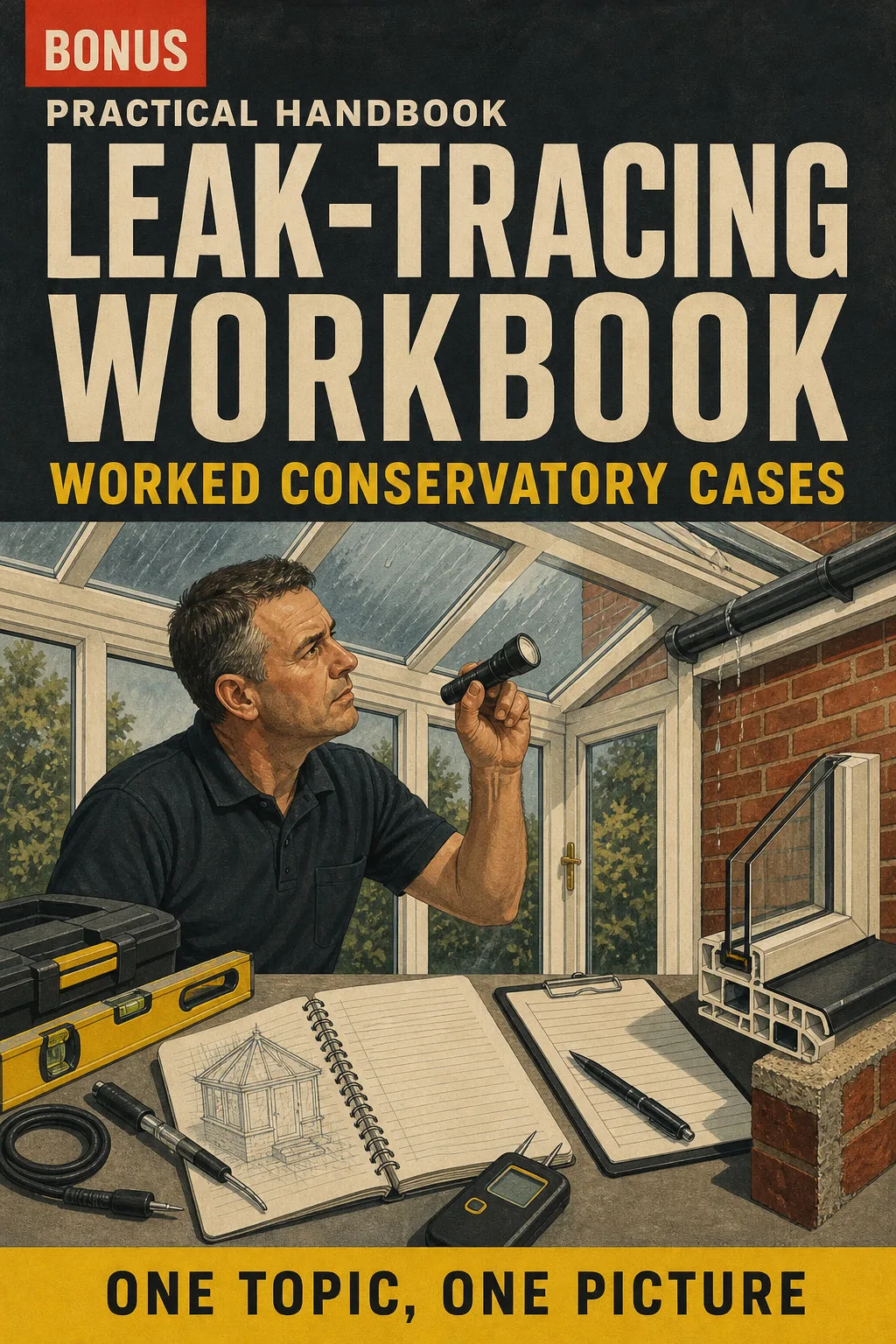
Leak-Tracing Workbook: Worked Conservatory Cases

BONUS 1: «Leak-Tracing Workbook: Worked Conservatory Cases»

Value on its own: US$ 17.90

Practise finding the real source of a leak on drawn cases, ridge to gutter, before you touch the sealant gun.

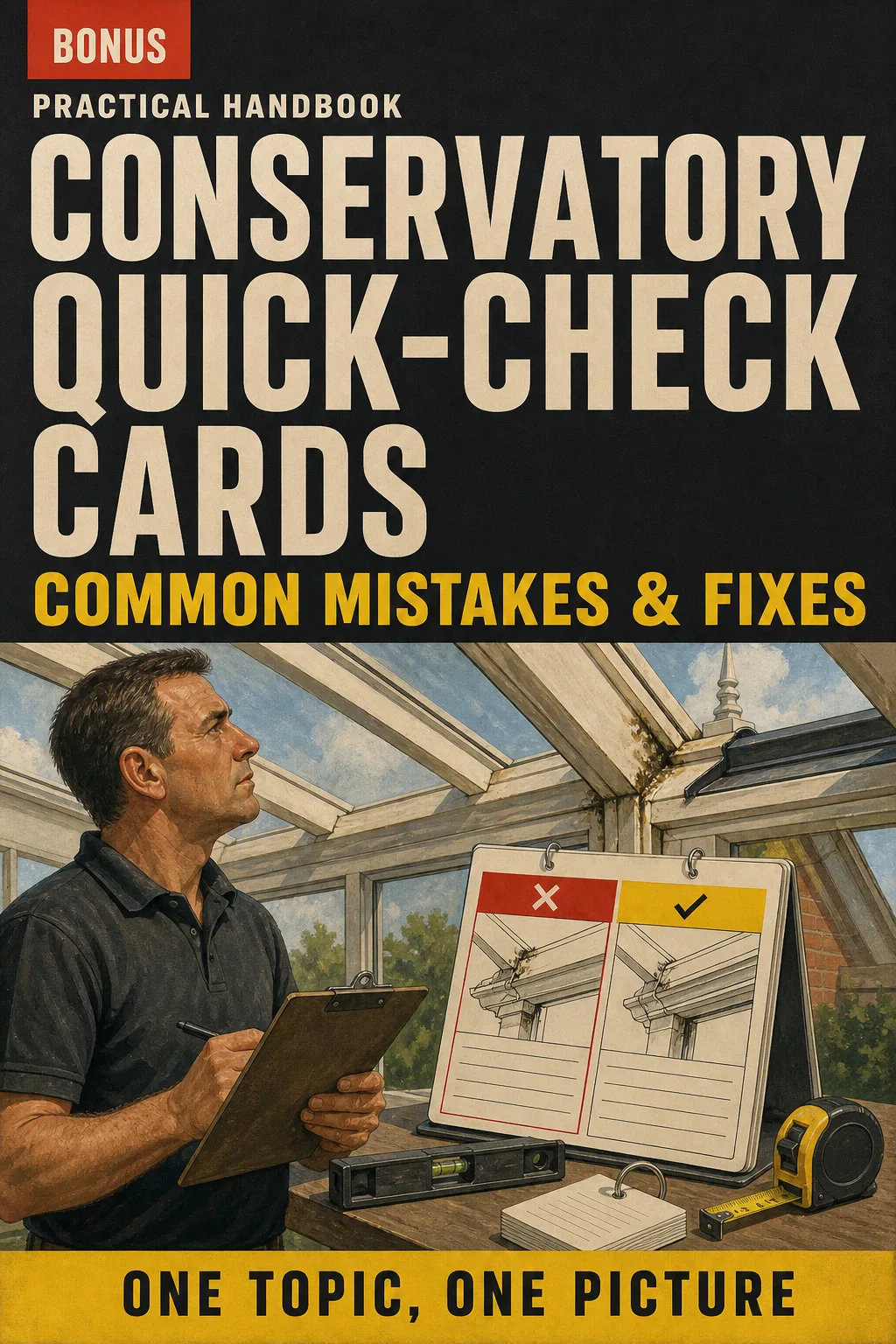
Conservatory Quick-Check Cards: Common Mistakes & Fixes

BONUS 2: «Conservatory Quick-Check Cards: Common Mistakes & Fixes»

Value on its own: US$ 14.90

The most frequent repair mistakes on one card each, with the right way drawn next to it, to print and keep in the van or shed.

Conservatory Repair Illustrated with 2 Free Books

  • Conservatory Repair Illustrated: 65 illustrated pagesUS$ 63
  • BONUS 1: Leak-Tracing Workbook: Worked Conservatory CasesUS$ 17.90
  • BONUS 2: Conservatory Quick-Check Cards: Common Mistakes & FixesUS$ 14.90
  • High-resolution PDF to printIncluded
Total value US$ 95.80
YOUR PRICE:
US$ 27
You save US$ 68.80
YES, I WANT CONSERVATORY REPAIR ILLUSTRATED FOR US$ 27

📄 This is a digital PDF book sent to your email: nothing is printed or shipped.

Secure purchaseEncrypted payment30-day guarantee

PDF by email: We email you Conservatory Repair Illustrated as a PDF, together with the two free books. It's a single payment: no installments, no extra charges.

Who This Book Is For

You're getting to know your conservatory

You're getting to know your conservatory

Every part of the roof has a name and a drawing, so you know what you're looking at before you buy a single part.

The leak is back and winter's coming

The leak is back and winter's coming

You follow one route from ridge to wall, write it on the inspection sheet and fix the real source once, instead of resealing everything.

You fix conservatories for a living

You fix conservatories for a living

Panels, bars, sealed units and roof options drawn one per page, printed and kept in the van to check a detail or show a customer.

Everything You Get Today

US$ 95.80US$ 27
YES, I WANT CONSERVATORY REPAIR ILLUSTRATED FOR US$ 27

📄 This is a digital PDF book sent to your email: nothing is printed or shipped.

30DAYS
GUARANTEE

30-Day Guarantee

Try Conservatory Repair Illustrated for 30 days, bonus books included.

We refund everything if the file won't open, if the book isn't what you see here, if you were charged twice or if the email doesn't arrive. Just email us.

You pay once. No subscriptions.

Frequently Asked Questions

Is it for me if my conservatory is 15-25 years old and I'd rather fix it myself?

Yes. It covers lean-to, Victorian, Edwardian, P-shape and gable roofs in uPVC, aluminium and timber, in metric units. It also works for glaziers and handymen who do these jobs.

Where does the content come from?

From the Building Regulations for England and their Approved Documents (Part K and Part L), Planning Portal guidance and HSE guidance on working at height and ladders. The repair pages work on any UK conservatory. The rules pages follow England, so in Wales, Scotland or Northern Ireland check those points with your local building control.

Is it official material?

No. It's an independent illustrated book. It isn't published or endorsed by any government body or roof system manufacturer.

Does it replace a professional?

No. It helps you understand and carry out common repairs. Structural checks, Building Control and anything you're not sure about belong with a qualified professional.

I've never repaired a roof. Is it too advanced?

No. It starts by naming every part of the roof in one drawing, then each repair on its own page. It also marks the jobs that belong with a professional.

When and how does it arrive?

As a PDF by email, sent to the address you enter at checkout.

Do I have to pay every month?

No. It's a one-off payment.

Can I have it on paper?

It's a PDF you can print at home or at a print shop, and keep in the shed or the van.

How does the refund work?

You have 30 days. We refund everything if the file won't open, if the book isn't what you see on this page, if you were charged twice or if the email doesn't arrive: just email us.

Before You Close This Page

No more resealing the same joint and hoping.

See the leak route drawn, from ridge to wall.

You go up the ladder knowing where everything is.

Drawings make studying faster.

The book is right below.

One-time payment: US$ 27 · Guarantee: 30 days · PDF by email

YES, I WANT CONSERVATORY REPAIR ILLUSTRATED FOR US$ 27

📄 This is a digital PDF book sent to your email: nothing is printed or shipped.